

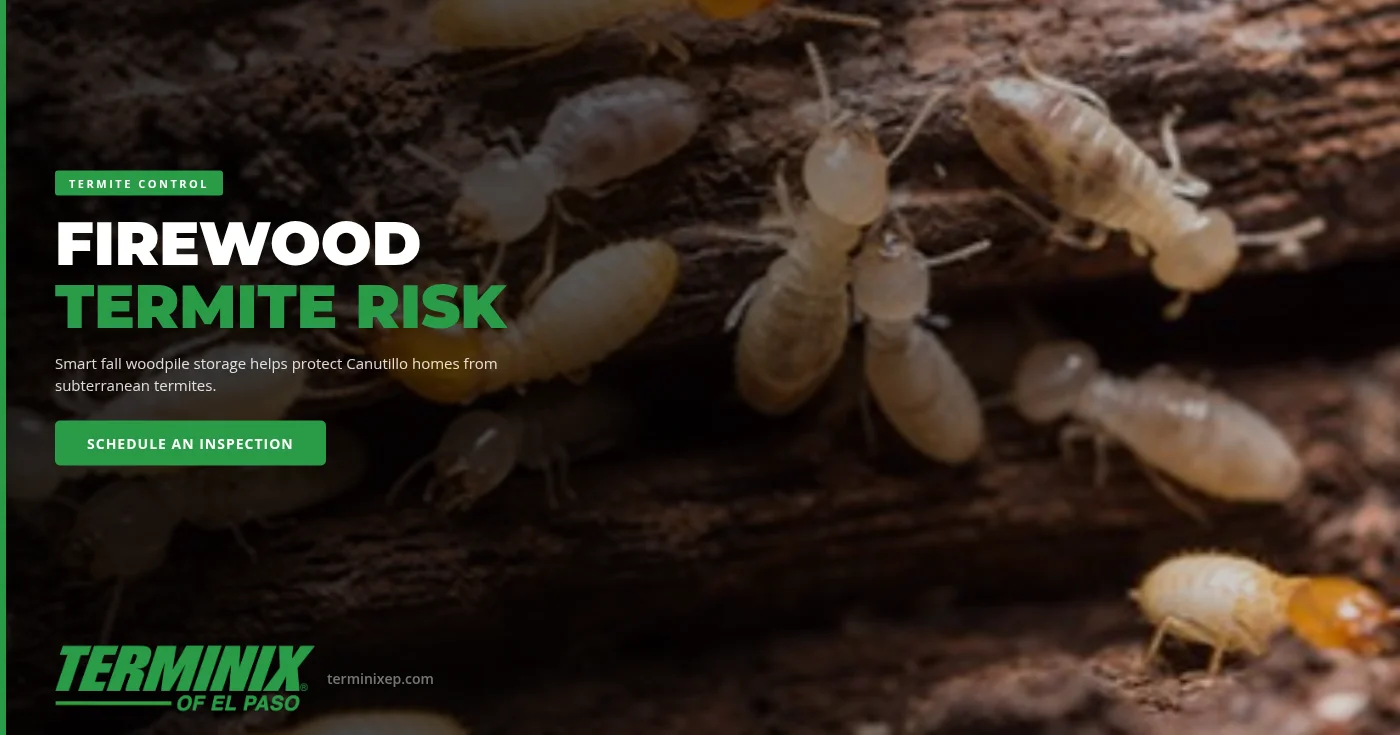
As cool evenings settle over the Upper Rio Grande Valley, many families in Canutillo start stacking mesquite, pecan and piñon for the fireplace. It’s a cozy fall ritual, but that tidy cord of wood leaning against a block wall can be one of the easiest invitations subterranean termites get all year. If you’ve been looking into termite control Canutillo TX homeowners can count on, one of the smartest places to start is your own woodpile.
Here at Terminix, we see the same pattern every autumn: firewood stacked against walls, lumber scraps behind the shed, fresh mulch along the foundation and irrigation keeping the soil damp. Subterranean termites in the El Paso area don’t take the winter off, so these fall habits can give firewood termites a short path to your home’s framing.
Below, we cover why termites stay busy in November, how woodpiles bridge soil and structure, common storage mistakes, river-valley risk, woodpile pest prevention steps, warning signs and when to call a professional.
Many people assume termites disappear once the weather cools. In reality, subterranean termites live in soil colonies and simply adjust. When the ground near the surface gets chilly, workers move deeper, where temperatures are steadier. When afternoons warm up, they can return to forage near the surface.
November in far West Texas is often mild, with highs commonly in the 60s and nights dipping toward freezing, though conditions vary from year to year and the National Weather Service is the best source for current local data. Warm afternoons, sun-heated walls and damp soil can keep foraging going longer than you might expect.
Swarming, when winged termites leave to start new colonies, usually happens here after the summer monsoon rains, not in late fall. What continues through autumn is quieter: workers tunneling, building mud tubes and feeding on any wood they can reach. Fall termite activity in Texas is easy to overlook precisely because it’s hidden.
That’s why a firewood stack placed in October or November matters. It sits on the ground for months, stays shaded and holds moisture underneath. It becomes a steady food source that a nearby colony can exploit while you’re busy with the holidays.
Subterranean termites need moist soil to survive. To reach wood above ground, they build pencil-width mud tubes that shield them from dry air. The U.S. Environmental Protection Agency points to wood-to-soil contact as one of the biggest conditions that invites termites. A firewood pile is essentially a stack of wood-to-soil contact.
So, can termites come into your house from firewood? Usually not in the way people picture. Workers cut off from their colony and soil generally don’t last long in a dry house, so a few logs carried inside are a smaller concern. The real issue is where the pile sits.
When firewood rests on the ground and presses against siding, stucco or a block wall, termites that find the bottom logs can follow the pile upward. Cracks in stucco, gaps along the foundation, wood trim or the space behind siding can then give them a hidden route into the structure.
A woodpile also hides the evidence. Mud tubes running behind stacked logs are nearly impossible to spot until you move the wood. The pile also shades the soil, keeping it cooler and damper, which creates the humid pocket termites prefer. Leave that pile in place all winter, and you’ve given a colony months of cover.
Firewood gets the most attention, but fall cleanup and home projects often leave several termite-friendly materials in the yard at once.
Stacking wood along the back wall or under a carport is convenient, but it puts food, shade and moisture right against your foundation.
Leftover boards from fence repairs, old pallets or broken furniture often end up behind the shed. Any untreated wood resting on soil can become a feeding site that helps a colony grow near your home.
Mulch keeps beds moist, and that moisture also appeals to termites. Thick layers piled against the foundation or over the bottom edge of stucco can hide mud tubes and create a bridge past the slab. Pruned pecan limbs, dead shrubs and leaf piles add more food and cover.
Woodpiles don’t just attract termites. Mice and rats nest in them on cold nights, and scorpions and spiders hide in the gaps between logs. If you’ve noticed rodents or bark scorpions near stacked wood, our rodent control and scorpion control services can address those problems alongside your termite concerns.
This community sits along the Rio Grande in the Upper Rio Grande Valley, near farm fields and pecan orchards. That setting shapes termite risk in ways generic articles rarely mention.
Most of the region is dry, and dry ground is hard on subterranean termites. River-valley soils, however, tend to be sandier and siltier, and many properties are irrigated for lawns, gardens, trees or small orchards. That soil can hold moisture well into fall while the surrounding desert stays parched. We can’t point to a single measurement for every yard, but it’s reasonable to expect damp, workable soil to support more termite activity than baked caliche.
Texas A&M AgriLife Extension identifies subterranean termites as the main structural termites in Texas. The subterranean termites El Paso area homeowners deal with may include desert subterranean termites as well as Reticulitermes species. The exact mix likely varies by neighborhood, which is one more reason a site-specific inspection is worthwhile.
Add a few common local habits, such as irrigation lines near the house, orchard prunings stacked for burning or mesquite piled against a sunny wall, and you have moisture, food and warmth in one place. That’s exactly what a foraging colony looks for heading into winter.
Good firewood habits won’t make a property termite-proof, but they remove one of the most common attractions. Here’s what we recommend at Terminix.
University extension guidance commonly suggests stacking firewood at least 20 feet from your home. Recommendations vary by source, so treat that as a practical target. Keep the pile well away from walls, decks, attached fences and wooden sheds.
Use a metal rack or concrete blocks to lift the bottom row about 5 inches or more off the ground. Better airflow dries the wood and makes mud tubes easier to spot. Never set the pile on bare dirt or a bed of wood chips.
Finally, don’t spray firewood with pesticides. Treated wood shouldn’t be burned, and spraying the pile does nothing about a colony living in the soil.
Finding termites in old firewood doesn’t automatically mean your home is infested. The question is whether they’ve moved beyond the pile. Signs of termites in a woodpile include soft, crumbling logs, mud packed into cracks and small, pale, ant-sized insects under lifted pieces. If you see these signs, check around the house for:
Because subterranean termites eat wood from the inside out, visible damage often shows up late. If something looks off, avoid breaking open walls or spraying store-bought products into the tubes. Doing so can scatter the termites and make the source harder to find. A quick monthly walk around the foundation, especially behind shrubs and stored items, can help you catch problems early.
The best time for an inspection is before you see damage. Here at Terminix, we often suggest scheduling one in the fall, when you’re already reorganizing the yard and stacking wood. It’s especially wise to book a termite inspection Canutillo families can rely on if:
During a visit, we check the foundation and slab edges, wood trim, attached structures, moisture sources and storage areas such as woodpiles and sheds. Then we explain what we found and recommend a plan for your property. That plan might call for targeted treatment, ongoing monitoring or simple changes such as relocating your firewood.
In Texas, termite work falls under structural pest control licensing overseen by the Texas Department of Agriculture, so it pays to rely on trained professionals instead of guesswork. Treatment approaches depend on the species, the construction and the severity of the problem, and no single method fits every home. Our goal is clear information and long-term protection, so you can enjoy the fireplace with peace of mind.
It’s possible but uncommon for logs alone to start an indoor infestation, because subterranean termites need soil moisture. The bigger risk is a woodpile sitting on the ground against your house. That kind of pile can give a colony a hidden path into your structure.
Many extension sources recommend about 20 feet or more, with the wood raised several inches off the ground. If space is tight, keep the pile as far away as you reasonably can and never against a wall.
Yes. Activity usually slows in cooler weather, and termites may move deeper into the soil. Colonies stay alive, though, and can keep foraging on mild days, especially in moist, irrigated soil.
Mulch holds moisture and can hide mud tubes, which makes it attractive to termites. Keep layers thin, pull mulch a few inches back from the foundation and leave the bottom of stucco or siding visible. Gravel works well in the strip right against the house.
A cozy fire shouldn’t come with a hidden cost. Move firewood away from the house, raise it off the soil, clear out lumber scraps and keep mulch in check. These simple steps make your property far less inviting to termites this winter. When you want a professional set of eyes, termite control Canutillo TX residents can rely on is easy to schedule.
Terminix proudly serves El Paso and the surrounding communities, and we understand the soil, irrigation and seasonal patterns that shape termite activity here. Contact us today to schedule your termite inspection, and let us help you protect your home all season long.
It’s one of the most common questions we hear each fall. The logs themselves rarely carry a colony indoors. The real problem is where the woodpile sits. Firewood stacked on bare soil and pressed against a wall gives subterranean termites food, moisture and cover, and it can act as a hidden bridge into your home’s structure. Mild autumn days, irrigated yards and damp river-valley soil can keep termites foraging longer than many homeowners expect.
Here’s how we help you stay ahead of the problem:
Woodpiles also attract rodents, scorpions and spiders, so we can look at the bigger picture while we’re on your property. Our goal is to give you clear answers and lasting protection so you can enjoy the fireplace with peace of mind.
Want the full breakdown of fall storage mistakes, warning signs and woodpile tips? Read our complete guide to firewood and termites.
 Mon – Fri: 8:00 am – 5:00 pm


